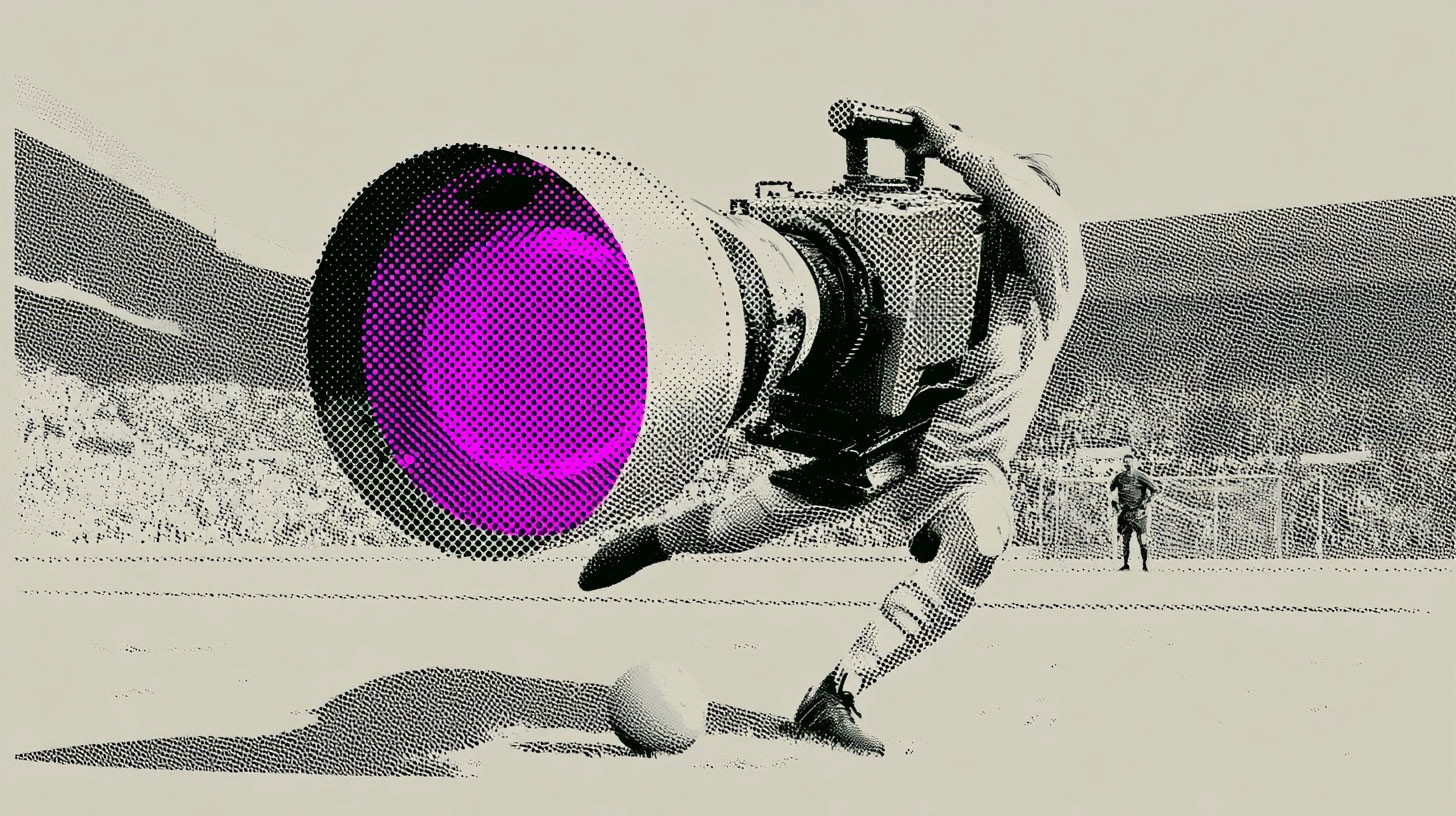

New ideas don't need applause, but they do need space to unfold positively. Leaders must create this space and tolerate imperfection.
Most ideas die in the hallway.
Not in the meeting. Not in the presentation. In the hallway beforehand.
Someone has an idea for a new format. For a video series. For an internal podcast. The idea is raw, not yet fully thought through – and that is exactly why it is never voiced. Because the space for it is missing. Because finished thoughts are expected where seeds of ideas are actually needed.
This is not a creative problem. It is a systemic problem.
What advertising agencies have known for a long time – and why it applies everywhere
In the creative industry, there is a term for this that has been set as a standard for decades: the tissue meeting.
Invented by Jay Chiat, founder of the New York agency Chiat/Day – famous for the Apple commercial “1984" –, it was originally an answer to a classic agency problem: clients judge finished ideas as if they were products. Yet an idea at this stage is not a product yet, but a promise. The solution: sketch ideas on napkins and present them informally before anyone has invested in elaboration. No finished concepts, no presentation, no deck, no commitments. Just directions.
The tissue meeting thrives on three things: Participation – the client is involved early on and helps shape it instead of judging later. Course correction – costly detours are prevented before the budget has been spent on them. And relationship – both sides understand early on how the other thinks. Not a polished idea is defended. Many raw ideas are sorted out together.
Whether in an advertising agency, a television station, or a company: the organizations that practice truly good communication craft have one thing in common. They consciously create spaces where raw ideas are welcome.
Inventive Thinking: Ideation as a Method
The tissue meeting is more than a format. It stands for a culture – and that can be translated.
At inventive, we call this transfer Inventive Thinking: before we produce, we understand. Before content is translated into formats, we ask whether there isn’t actually a program behind it. Before an idea dies, we give it the space it deserves.
And it is particularly relevant for everyone who understands content not just as a marketing task – but as a strategic instrument. Whether in corporate communications, marketing, HR, or Learning & Development: wherever communication is meant to have an impact, clarity is first needed on what the company actually has to say.
And that is harder than it sounds.
From the Tissue Meeting to the Inventive Canvas
A tissue meeting opens the space. The Inventive Canvas gives it structure.
The Inventive Canvas is our full-day workshop – developed from 20 years of experience in TV production and strategic consulting. The method was developed in collaboration with braincycles. It helps companies methodically identify their own content potential, evaluate it, and translate it into viable business cases.
What makes it special: The canvas does not ask the question